
Basic Equipment For The "New" Media Producer
A look back at the Basic Video Production Essentials for producers in 2011 - things haven't changed that much - ReFocus Blog
COMMUNICATIONS TECHNOLOGY GOVERNMENT COMMUNICATIONS
Thomas Y. Lynch
11/3/20253 min read
In 2011 I started my first blog series called "Refocus Blog." It was a blog just like this one (but with more rants!) I post this on my current COMMotion Blog because it's good to see how my communications career progressed, and how the communications field has changed.
Written December 16, 2011 - Refocus Blog.
I recently had a bright young, up-and-coming videographer ask me about a basic equipment pack. So I sent him back a list of the bare electronic news gathering (ENG) equipment. Before I sent it to him, I asked what he had already. I was surprised when he replied ….”the camera.” Because he was a newbie, I understood that this was a passion of his, and I always like to offer guidance and advice – because I had people in my life who helped me, such as Carla Livingston, Jake Postma, Bill Evans, and Tom Eskine. Industry professionals who I stole bits and pieces from to find my way in this industry.
As I browse Facebook and YouTube, it seems as though everyone is shooting video, but no one wants to invest what it takes to get it right. I applaud media groups such as Carolina Exposed DVD and MoPics who put in research and invest in their craft. So I wanted to share my basic ENG pack – and the estimated cost of each piece. Remember, this is the bare minimum it takes to shoot GOOD video CONSISTENTLY.
Camera
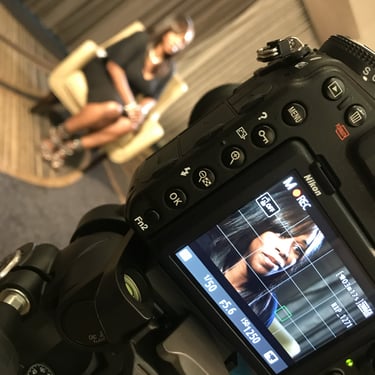
Camera ($1500-$3000) – from Super VHS to SD Cards, the camera, believe it or not, is not the most important piece for a beginner. As you grow a clientele and they request HD products, then you will be forced to upgrade. These days, it’s easy to jump into HD with a cheaper camera – but this is a trap – here is why:
A cheap HD camera usually means it’s fully automatic, which doesn’t allow you to adjust iris, shutter speed, and even focus on some models. The more you can adjust your camera settings, the better you can control the image. Also, most times these cameras have an internal mic and only hold a limited amount of UNCOMPRESSED video.
Rule of thumb: if the HD camera costs less than $1500, then it is not a good camera for the aspiring professional.
Lights
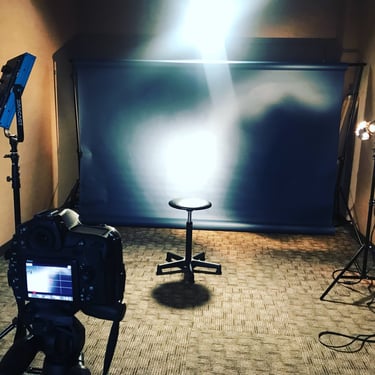
Lights ($75-$1000) – On camera and external lighting is one of the most important tools you will have as an aspiring professional. Video is a measurement of light to a subject (Carla Livingston). Dark video is appropriate for many applications; however, the audience is not stupid; they know when there should be more light. A good, effective tool is the on-camera light; they are cheap, lightweight, and most come with battery power. It offers an unimpressive light source, but it is definitely better than dark video. I like to plan lighting at the venue so that I can control the shoot and all the lights on a set; this allows me to tweak and adjust for the desired “feel” of the shoot.
Mics
Microphones ($200-$900) – I don’t care if your camera has an internal mic – if you are taping a human voice, you need an external mic (handheld or lavalier). Don’t believe me? – turn on any tv show to see what the professionals use. If you are doing video for a hobby, disregard this. But if you are an aspiring professional – go get a mic! Sound is very important – I would say more important than video. Think about it – if the video is crappy and sound is good, viewers will still understand what’s going on – and the point you are trying to make.
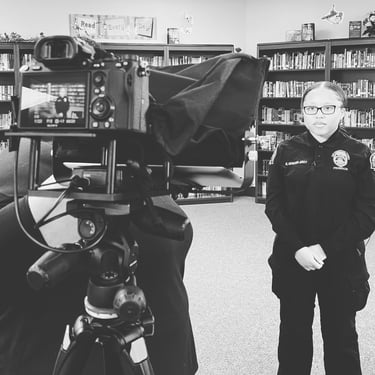
Tripod ($150 – $450) – The Blair Witch Project has been done – shaky video is a sure sign of a beginner. All camera moves should be smooth and natural. Even most professionals prefer to shoot on a tripod. Practice hand-held shots at your family reunion – but when you have work for a client – do them a favor: stabilize!
Headphones
Headphones ($50-$300) – Imagine being on a shoot, the lights are perfect, the subject is interesting, and the shoot goes perfectly. You take it back to the office to edit, and there is no sound! (This has happened to me.) After that, I purchased a camera with an audio display on the monitor, and I got a set of headphones. A simple, easy way to monitor audio as it’s recorded.
This is the basic equipment list – if you are serious about video, then you will have this list in some form. This is the building block of good video. I know some of you are saying I don’t need all of that to get good video – if so, please take my number down (252) 714-8249 , and send your clients to me!
Re-Focused
Thomas Y. Lynch
“How well we communicate is not determined by how well we say things but how well we are understood.”