
Outreach Oasis - Street-Based Engagement
Shadowing a Multi-Disciplinary Team through the desert
NEWS ARTICLE
Thomas Y. Lynch
8/23/20254 min read
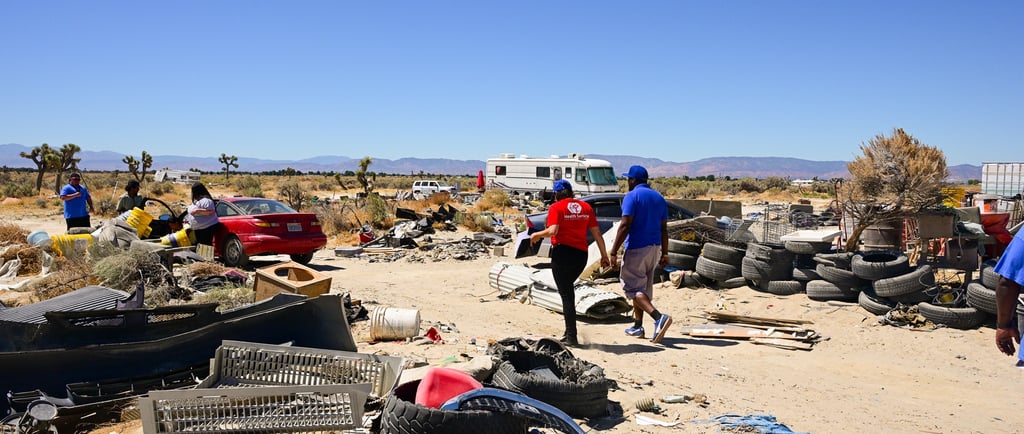
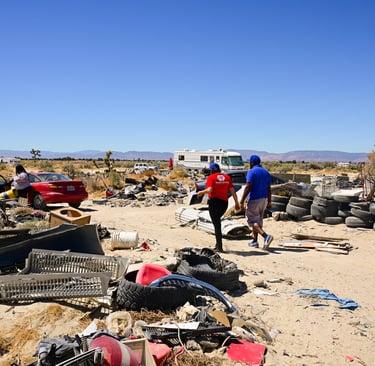
My day started in Lancaster, CA, where the temperature had already soared past 100 degrees by 10:00 AM. As I accompanied one of Housing For Health’s street-based teams through the desert, I wasn’t sure what to expect. The experience reminded me of my time with San Bernardino County Probation, when we often carried out desert operations to check on probationers and ensure compliance with their terms and agreement. But this was different. While probation operations focused on enforcing compliance, Street-Based Engagement operations are dedicated to creating opportunities and providing support to the most vulnerable members of our community.
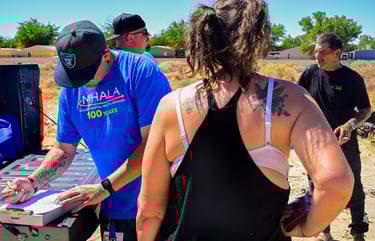
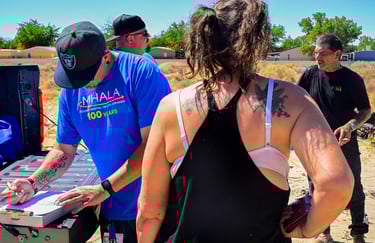
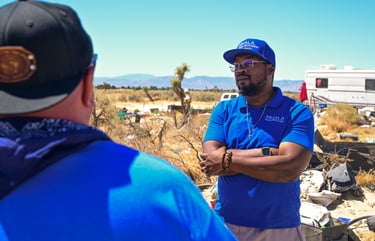
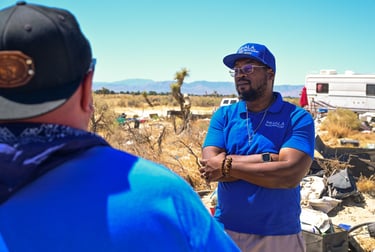
Housing for Health's street-based engagement team in Los Angeles County is a multi-disciplinary group of professionals focused on connecting people experiencing homelessness with complex health and behavioral health needs to housing and supportive services. They build relationships with individuals living on the streets, often in encampments, to assess their needs and connect them with resources like healthcare, mental health treatment, and ultimately, housing.
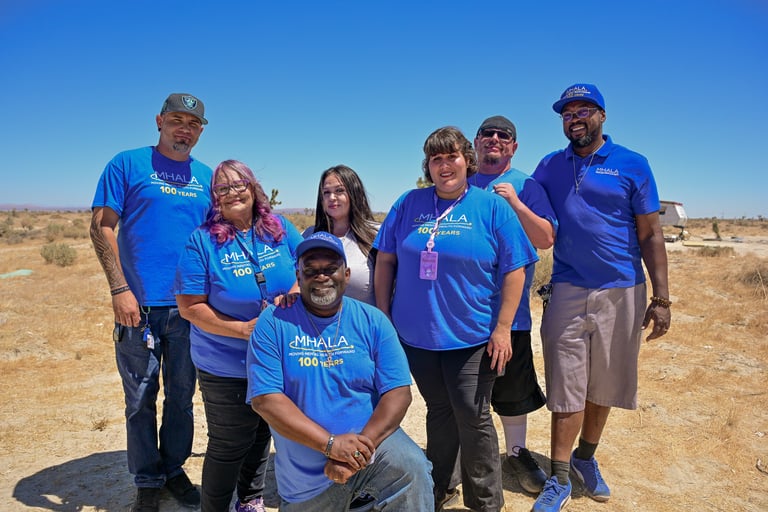
The team I shadowed is a Multi-Disciplinary Team (MDT). The teams include clinicians specializing in physical health, mental health, and substance use, as well as case managers and individuals with lived experience of homelessness. Each person has a role that is specific to a particular need.
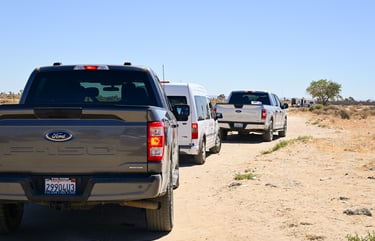
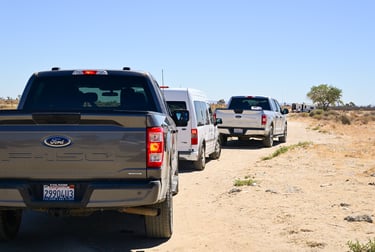
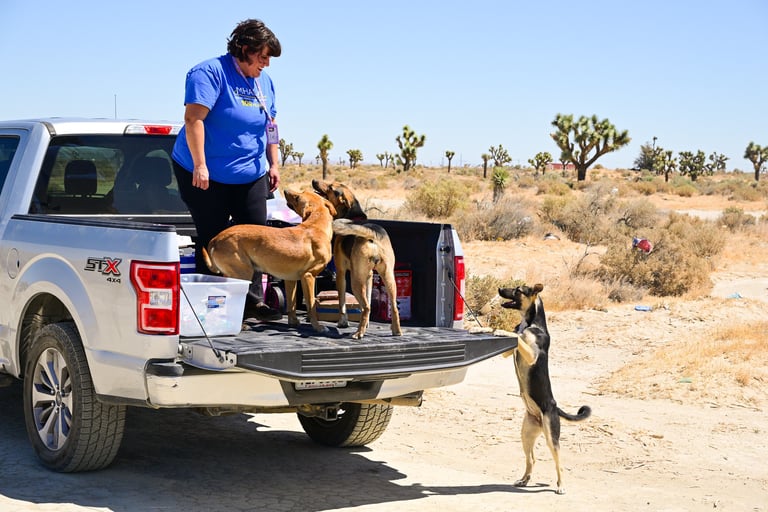
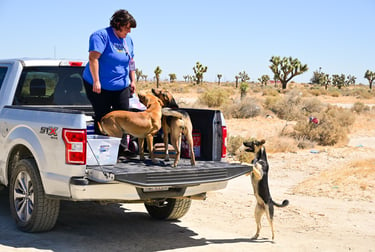
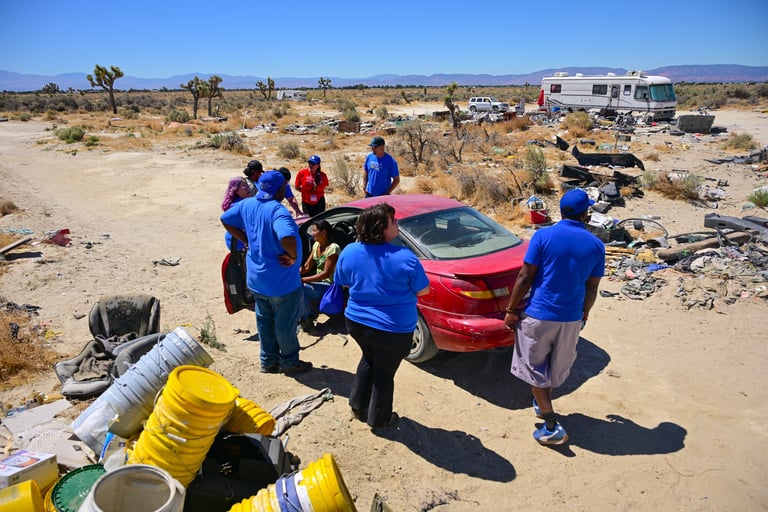
The team travelled to encampments in 3 vehicles, as we approached the area, we were greeted by a group of 3 very active and friendly dogs. The dogs were the loyal companions of the residents of the encampment. It was obvious that the faithful friends were familiar with the team, and one of the team members hopped out and provided the dogs with a bowl of fresh water. Soon after, the resident appeared from her dwelling, a small abandoned trailer. She approached the team with a smile and the look of optimism, and quickly started a conversation with a team member. Michael Freeman, Outreach Program Manager for Mental Health America of LA. (MHALA), knew the client and started a conversation by handing her a bottle of water. Mr. Freeman and I spoke earlier that morning, where he emphasized the importance of establishing a connection with the people he serves. He stated, “I see firsthand how critical our work is in the Antelope Valley. Every day, my team and I are out in the community conducting wellness checks, handing out hygiene kits and food, helping people gather documents needed for housing and benefits, and—most importantly—building trust.
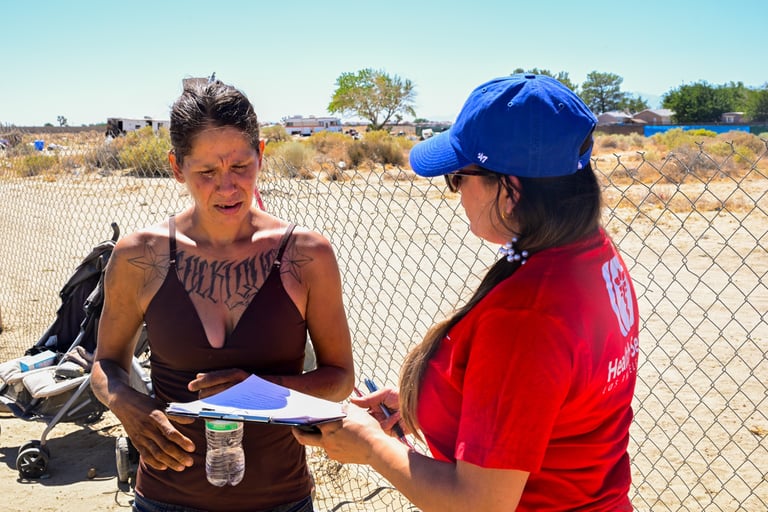
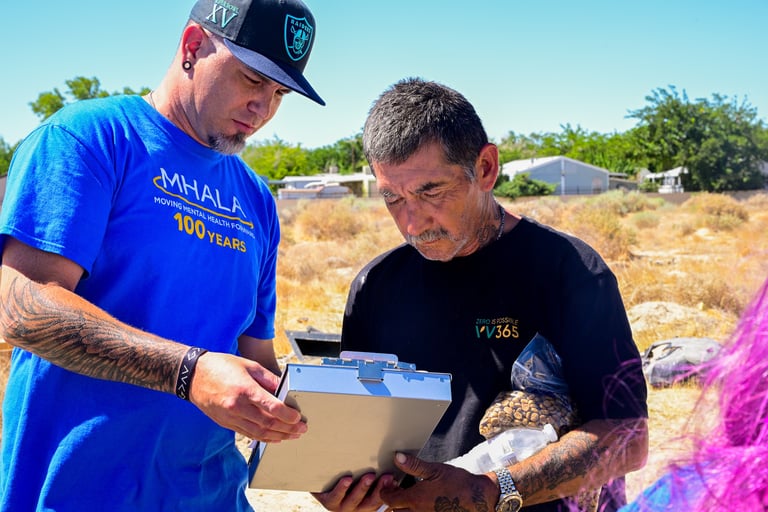
The theme of connection is an embedded principle throughout the team’s work. Along with general outreach and health wellness checks, their primary purpose is to connect individuals with vital services. Housing, health care, and benefits advocacy are crucial needs that MDTs provide to unhoused individuals each day. “Our services are person-centered, it’s not about when we want it to happen, but when the individual is ready, said Jannette Rinkenberger, Program Manager of Street-Based Engagement, for Housing For Health. She continued, “Every person has their own journey and their own path to recovery. Recovery is not linear, and each person carries unique trauma and experiences. That’s why it takes someone who truly cares for people to make a difference in this field.”
More than 500 street-based outreach workers collaborate across various agencies throughout the LA community. The Antelope Valley (AV) team conducts outreach every day, including weekends, reaching 10 to 15 encampments across diverse areas such as Lancaster, Palmdale, Quartz Hill, Lake Los Angeles, and Little Rock. They also respond quickly when new encampments “pop up,” ensuring their coverage of the valley remains both thorough and comprehensive. The impact of their outreach is both significant and measurable.
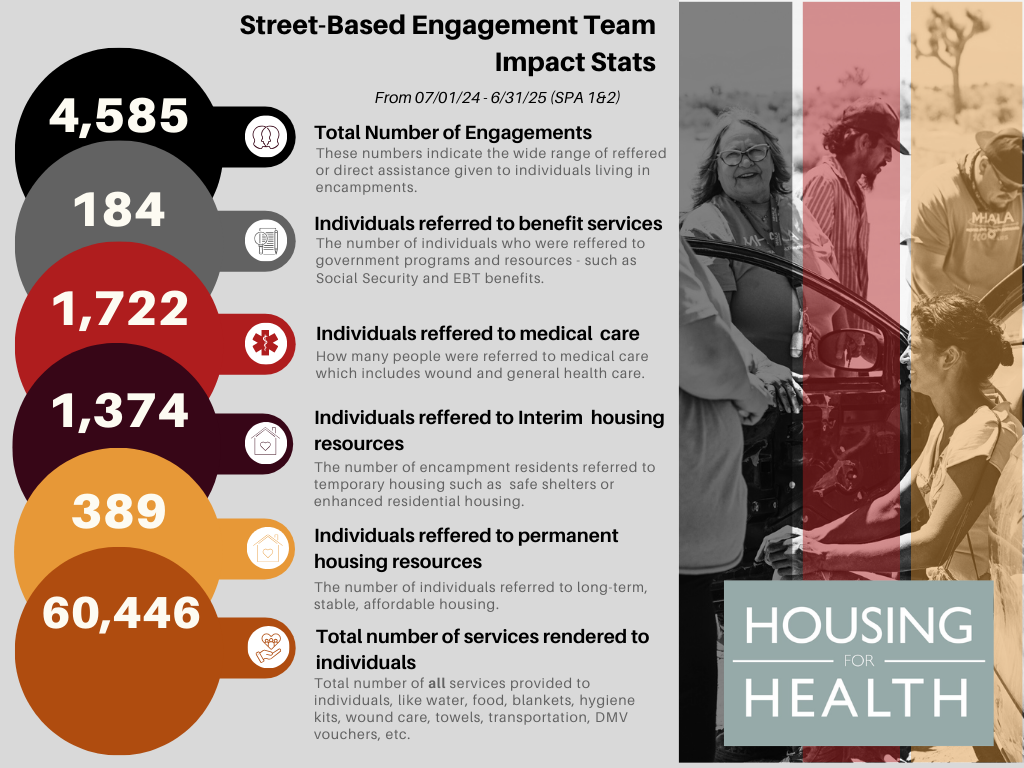
As I left for another assignment, the team headed back to the office to restock before setting out to another encampment. By then, the temperature had cooled to a breezy 98 degrees. Each day, I see firsthand how impactful the AV team of MHALA is, providing vital, life-saving services. What left the greatest impression on me was their genuine humanity and compassion. Even a simple "How are you doing?" or "I have good news about your housing application" can be a lifeline for someone experiencing homelessness—and a reminder to the rest of us of what it means for our community to be its best.
Thomas Y. Lynch
“How well we communicate is not determined by how well we say things but how well we are understood.”