
Books -Before it's too Late Start Collecting Now!
Why Collecting Books Today Is an Investment in your Future
COMMUNICATIONS LIFE
Thomas Y. Lynch
9/2/20256 min read


I recently had a conversation with a colleague, we were discussing Ai and its implications on our lives. After the speculating on the down fall of man, I came up with a prediction that if history teaches us correctly - it will happen. There will be a movement in the near future, where people will abandon their digital devices, profiles, and algorithms. We will, as a society, ditch our digital life - and turn back the hands of time and go analog. I will have to create a blog about this subject at a later date, but now I want to explore the role of books in that perceived future. Books are a dying dinosaur, but I foresee they will one day - be as valuable as gold.
In a world where information is at our fingertips and the digital landscape is ever-expanding, the idea of collecting physical books might seem quaint, even unnecessary. Yet, as someone who has watched the tides of communication and technology shift over the years, I am convinced that building a personal library is not just a nostalgic pursuit—it’s a forward-thinking investment. Here are four compelling reasons why collecting books now will be both beneficial and valuable in the years to come.
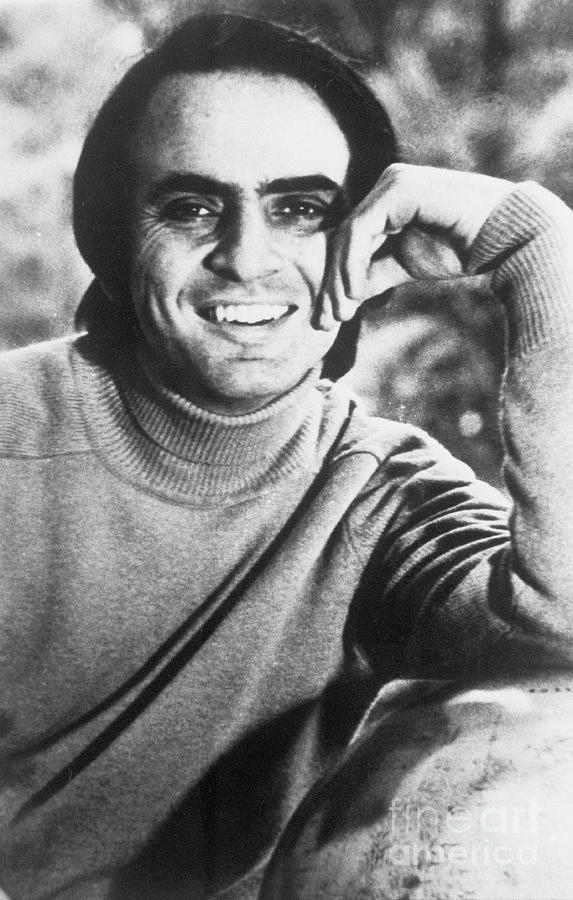
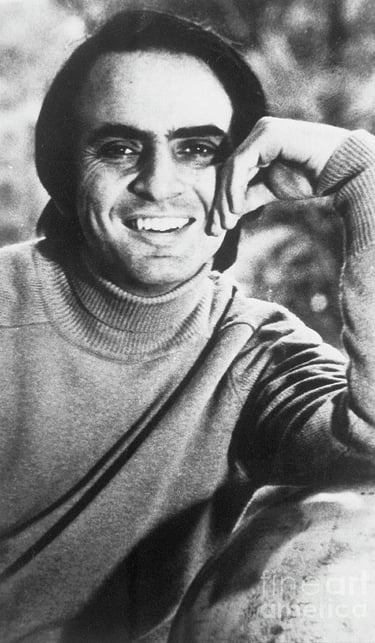
“One glance at a book and you hear the voice of another person, perhaps someone dead for 1,000 years. To read is to voyage through time.” – Carl Sagan
1. Books Are Time Capsules: Frozen Moments of Knowledge
In our new information landscape, books serve as snapshots of the eras in which they were written. Often times when I do research I go to old authors to paint the scene of the world from their perspective. Unlike the constantly updated and edited world of online content, a book is frozen in time. Each volume captures the language, knowledge, and worldview of its moment. This permanence allows us to compare what was known or believed at one time to what we know now, providing invaluable context for research, reflection, and critical thinking.
Imagine, decades from now, opening a book written in 2020 and seeing how people viewed the world—what we feared, we they dreamed, what we believed to be true. How will we view the current administration? How will we compare our Information Age? This kind of historical perspective is essential for understanding how societies evolve. Books provide a tangible record of humanity’s intellectual journey, making them indispensable for anyone interested in the past, present, or future.


“There are some books that reached through the noise of life to grab you by the collar and speak only of the truest things.” – Jeffrey Eugenides
2. Books Are More Reliable: Free from Algorithms and Distractions
Unlike online information, which is shaped by algorithms designed to keep us clicking, books offer a sanctuary from digital manipulation. When you read a book, you engage directly with the author’s ideas—without pop-up ads, suggested content, or social media diversions pulling you in different directions. This allows for deeper concentration and a more authentic engagement with the material.
Books empower readers to form their own opinions, unfiltered by trending topics or the echo chambers of the internet. In a world where misinformation can spread like wildfire online, the curated and edited nature of many books makes them a more reliable source of knowledge. I’m a tactile person and the ability to hold a physical book and immerse oneself in its pages is a quietly radical act in an age of constant digital noise.


“If there’s a book you really want to read, but it hasn’t been written yet, then you must write it.” - Toni Morrison
3. Books Capture the Essence of Humanity—and They’re Beautiful
There is something profoundly human about books, especially those written before the era of artificial intelligence. These works capture the thoughts, emotions, and aspirations of their authors in a way that feels direct and unmediated. Books are beautiful objects, too—crafted with care, each one unique in its cover, binding, and typeface.
Picture going into an old library: sunlight streaming through tall windows, illuminating rows of shelves lined with well-worn volumes. The distinctive scent of old paper and leather fills the air, mingling with the quiet hush of turning pages. Here, books feed not only the mind but also the senses—the tactile pleasure of holding a volume, the visual of spines lined up on shelves, the gentle sound of a page being turned. In our increasingly virtual lives, books give us a physical presence and a sense of grounding.
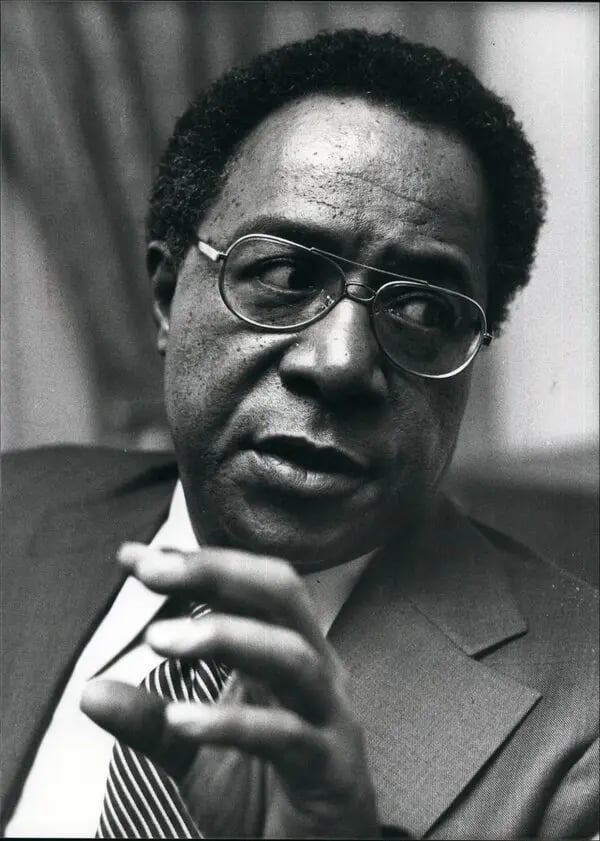
"I look at my books the way parents look at their children. The fact that one becomes more successful than the others doesn't make me love the less successful one any less." - Alex Haley
4. The Importance of Libraries to Early Americans
Edward C. Williams, America’s First Black Librarian, was a pioneer in Library Sciences, In 1898, Williams took a sabbatical from Western Reserve University to pursue a master’s degree in librarianship at the New York State Library. He knew that if information is power, then libraries are the power plants. Historically, libraries have played a central role in American life. For earlier Americans, owning a library was a sign of social status—a mark of education and refinement. Libraries were gathering places, sources of knowledge, and symbols of aspiration. When I was a boy growing up in Stamford,CT., I remember encyclopedia salesmen often targeting African American families, knowing that the ownership of such a resource was seen as a step toward empowerment and respectability. These collections were not just about information; they were about hope, ambition, and the pursuit of a better life.
Conclusion
Books are valuable in ways that transcend their pages. As outlined above, they are time machines, reliable guides, and beautiful artifacts that enrich our lives. I believe there will come a time when the world returns to the analogue pleasure of page-turning books—not just for a glimpse into the past, but for accurate research, fact-checking, and the fortification of true knowledge. The adage “information is power” never met the internet. In the world of books, that power remains—waiting for those wise enough to collect and cherish it.
Thomas Y. Lynch
#commlife for comm professionals





The "5" Dubs | Coffee Mug
Coffee with colleagues just got exciting!
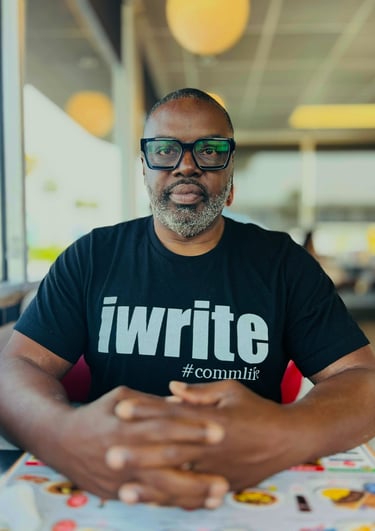
iwrite| T-shirt
Impress the office!






I Communicate | T-Shirt
Invite them to talk!
The "5" Dubs | T-Shirt
Stop Doom Scrolling!
Scroll Less <Read More
Show them who you are and what you do!
Write Shoot & Edit | T-Shirt
Editors, Authors, Publishers - own your profession!


Comm & Unity | T-Shirt




IB - Rolling | T-Shirt
You can't have Community without Comm & Unity
You can't have Community without Comm & Unity
Comm & Unity | 11oz. Mug
“How well we communicate is not determined by how well we say things but how well we are understood.”