
Write It, Shoot It, Say It: The Convergence of American Newsrooms
If TV, newspaper, and radio had a baby, it would look like our current media landscape.
GOVERNMENT COMMUNICATIONS
Thomas Y. Lynch
4/8/20265 min read


Government Communicators saw this coming a mile away. I remember working for the City of Palmdale, and my staff included a writer, videographer, graphic designer, webmaster, and social media specialist. This was a small local government, but the framework was from the future. I have often said that Government Comms offices are their own news outlets. We have to be well-versed in all the media. But the real question is how did this happen?
There was a time when you knew exactly what a news outlet was by how it reached you. The newspaper landed on your porch (yes, it's still a thing). The radio station talked to you in the car. The TV station showed up at 6 and 11. Each one stayed in its lane. Those lanes are gone. Pull up almost any major outlet today and you'll find three things under one roof: a website full of written stories, a video channel with reporters on camera, and a lineup of podcasts. The New York Times now produces all of its podcasts in video. Newspapers are hiring YouTube producers. TV stations are writing long-form articles for the web. Everybody does everything.
I spent years in a newsroom before I moved into public information, and I've watched this shift up close. It didn't happen by accident. Here are three reasons why.


Stay warm and stylish with this communications hoodie that is perfect for social butterflies who thrive on social media. Click the button to buy!
Are you social?


1. The Audience Moved, and Outlets Had to Follow
People stopped coming to the front door. They don't type in a newspaper's web address anymore. They scroll. This year's Reuters Institute Digital News Report found that social media and video networks have now overtaken news websites and apps, and that 77% of people worldwide watch online news video every week. That changes the math. If your audience lives on YouTube, TikTok and Spotify, a great written story sitting on your website is a story most people will never see. So outlets went where the people were, and every platform demanded a different format. A story became a story, a clip and a conversation.
It also helps explain why local news has struggled so much. The outlets that couldn't afford to show up everywhere got left behind.
2. The Money Followed the Format
Display ads on news websites don't pay what they used to, and AI search tools are sending publishers less traffic each month. Advertisers are spending on video and audio. Deloitte expects podcast and video podcast ad revenue to reach about $5 billion in 2026, growing close to 20% in a single year.
There's a second benefit that's easy to miss. Podcasts build habits (everyone has their favorites). People who listen to the same hosts every morning start to feel like they know them, and that relationship keeps subscribers from canceling. Publishers now see podcasts as a key tool for retention, not just reach. I've written about how many podcasts struggle to find an audience, but when a trusted news brand gets it right, the payoff is loyalty.


3. The Tools Got Cheap Enough for Everyone
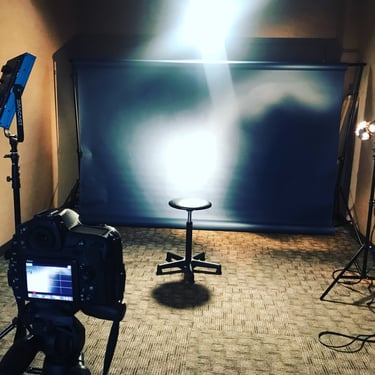
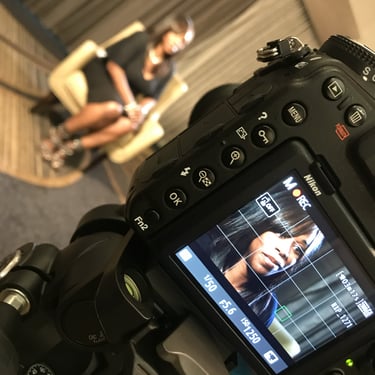
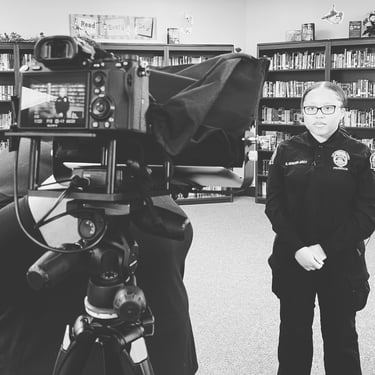
Twenty years ago, putting a story on video meant a truck, a crew and an edit bay. Today a reporter can shoot, record and publish from a phone. A basic production kit fits in a backpack, and editing software that once cost thousands now comes free on a laptop. When the cost of making video and audio dropped close to zero, the old excuse of "we're a print shop" went away. The writer became a host. The photographer became a videographer. The newsroom became a studio. That's why so many outlets are now training print reporters to be on-camera talent.
What Comes Next
If I had to bet, the next step looks like two things happening at once.
First, the personality becomes the outlet. Audiences are following people (Rachel Maddow, Hannity, etc.), not just brands. The Reuters Institute found that 27% of people globally already get some news from individual creators and influencers. News organizations will respond by building around their own stars: reporters with their own shows, their own followings and their own feeds, all under the outlet's banner. The outlet becomes more like a record label than a newspaper. Check out Netflix podcast line-up.


This stylish communications t-shirt is perfect for a communicator who is all business.
Are you the Spokesperson?


Second, AI becomes the delivery truck. More people are starting to ask chatbots what happened today instead of searching for it. Outlets are already negotiating to license their reporting to AI companies. Picture a near future where you ask your phone for the news and get a personalized briefing, read in your favorite reporter's voice and built from that outlet's journalism. The article doesn't disappear. It becomes the source file everything else is built from.
That's a big change, and it comes with real risks. Who controls the algorithm controls what we see. But it's also a reminder of something I've said before: Traditional Media is Sleeping - Not Dead! The skills haven't changed. Find the story, verify it and tell it well. Only the delivery has.
What It Means for Communicators
If you work in public information or PR, this matters for your pitch. Reporters aren't just looking for a quote anymore. They're looking for a guest, a visual and a sound bite. When you pitch, offer the interview, the b-roll and the podcast angle. The outlet that does it all will appreciate the communicator who thinks the same way - and that better be you.
Thomas Y. Lynch
" As a lifelong communicator it's refreshing to see connection within our community. Our profession is front and center of a changing world - our purpose is still the same. Enlighten our constituents to drive meaningful discord."
Dr. Chantay Moye




★★★★★
“How well we communicate is not determined by how well we say things but how well we are understood.”